
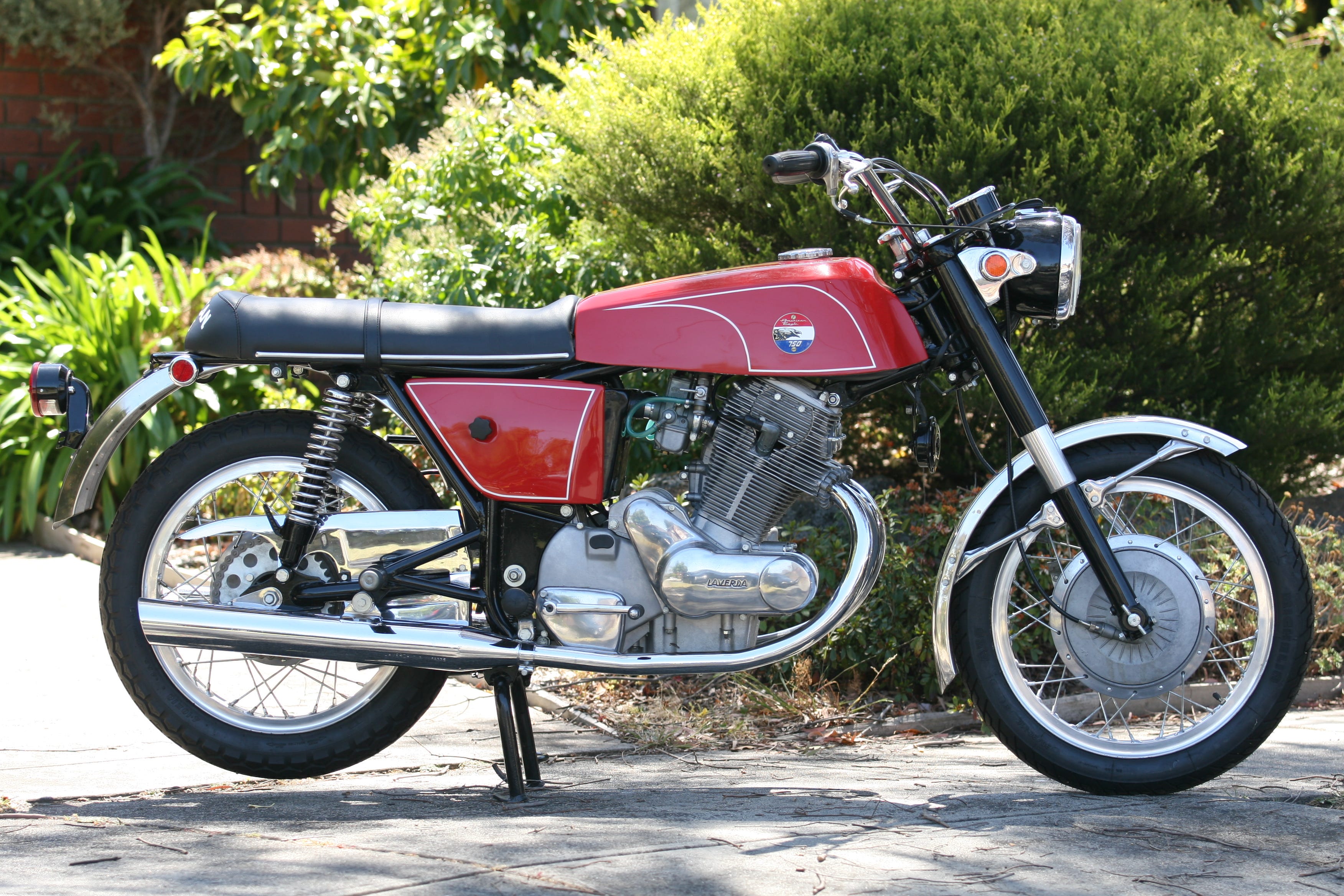
AMERICAN EAGLE 750
The American Laverda

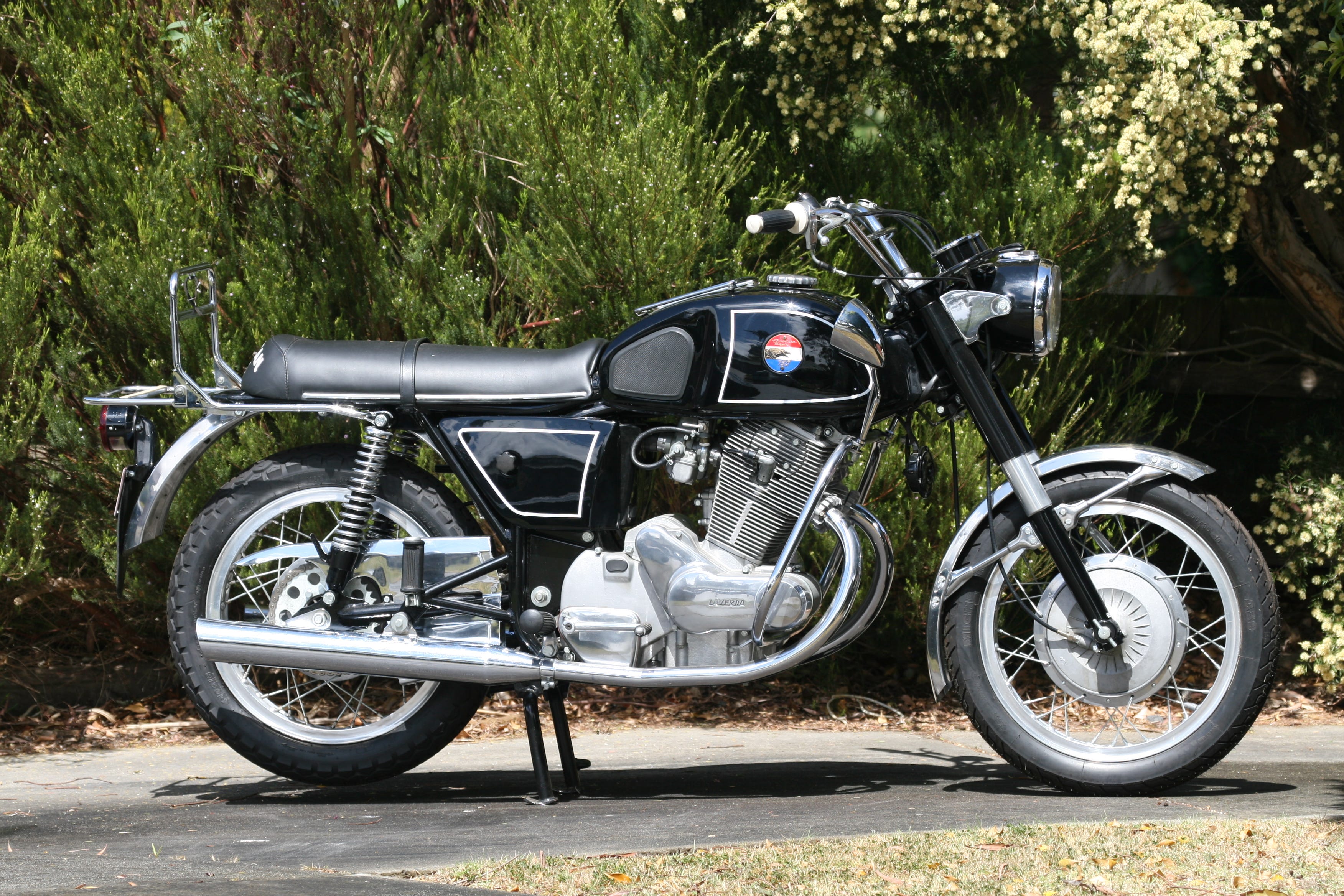
When the motorcycle stunt rider and dare devil Evil Knievel, champion of all things American, signed his first motorcycle endorsement deal it was with American Eagle. Knievel was famous for jumping line-ups of cars and buses but few of the thousands who turned up to watch Knievel in 1970 were aware he was actually riding an Italian motorcycle.
Knievel was outfitted with two American Eagles and paid $2500 a month to use them exclusively in his travelling show during 1970. He claimed a world record on the American Eagle, and in a well-publicised jump at Pocono crashed on landing, sustaining serious injuries.
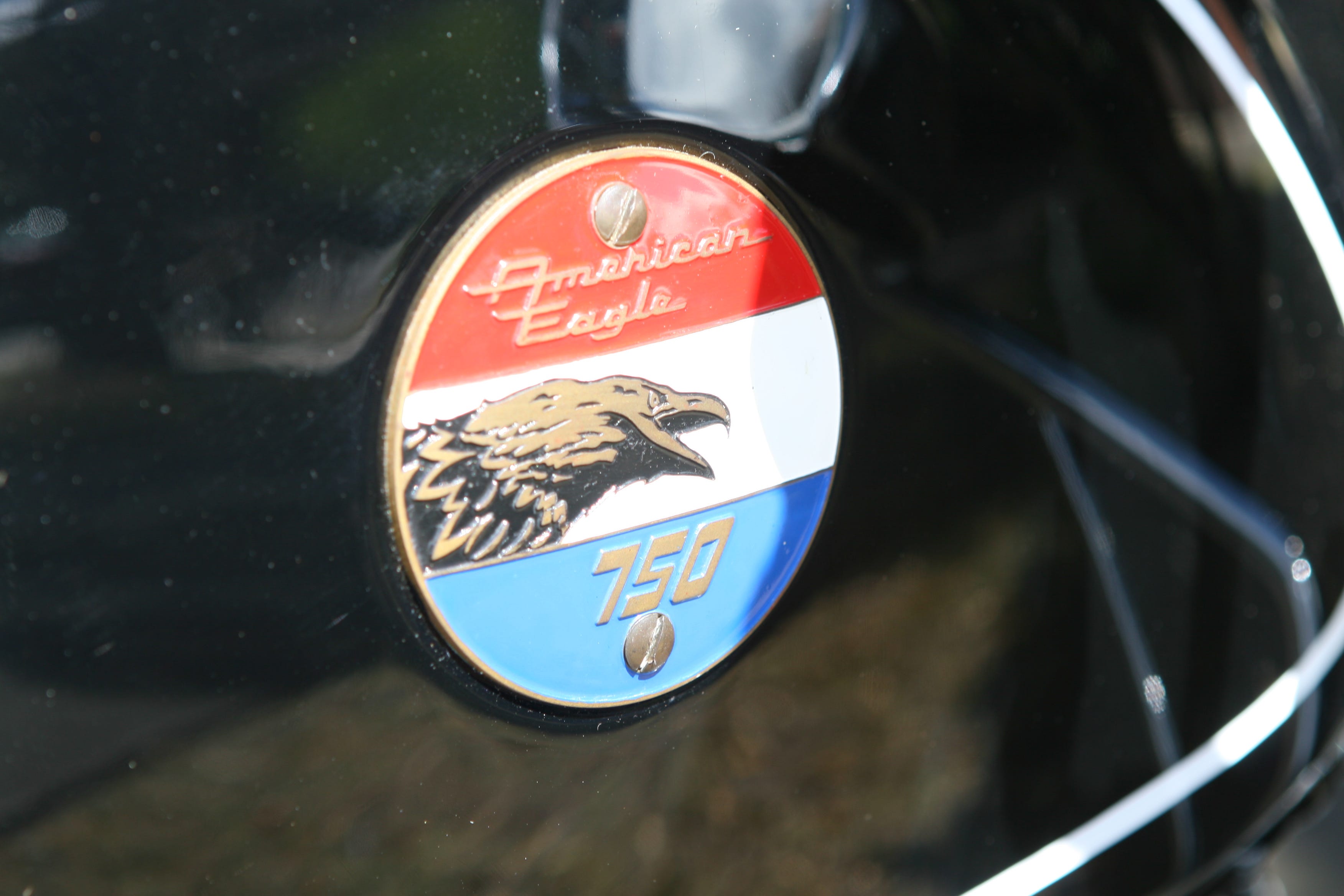
The American Eagle was the brainchild of Jack McCormack, the archetypical American entrepreneur. An ex-marine, McCormack worked for Honda where he was responsible for the famous “You meet the nicest people on a Honda” advertisement. He left to help Suzuki set up its US distribution and sold his stake in 1966.
With his sizeable payout from Suzuki McCormack, and another former executive Walt Fulton Snr, decided to set up a lifestyle company selling motorcycles, snowmobiles and dune buggies. McCormack was attracted to the Laverda twin when he saw a report in Cycle World magazine during 1966. Publisher Joe Parkhurst then introduced McCormack to Massimo Laverda.
After a trip to the 1967 Isle of Man TT and collecting a Ferrari 275GTB from Maranello, McCormack and Parkhurst visited Laverda in Breganze. McCormack persuaded Massimo Laverda to produce a 750 for the US market.
Despite its name this was very much an Italian Laverda 750 twin. After a trip to the US in 1964 Massimo Laverda decided to produce a new large displacement twin that could be sold in America. The resulting 650 twin drew heavily on three motorcycles that Massimo admired; the Honda CB305 Super Hawk, BMW R69S, and Norton 650SS. The most obvious derivation was the engine, this looking superficially similar to the Honda, but the frame was derived from the Norton Featherbed, but without the lower cradle.
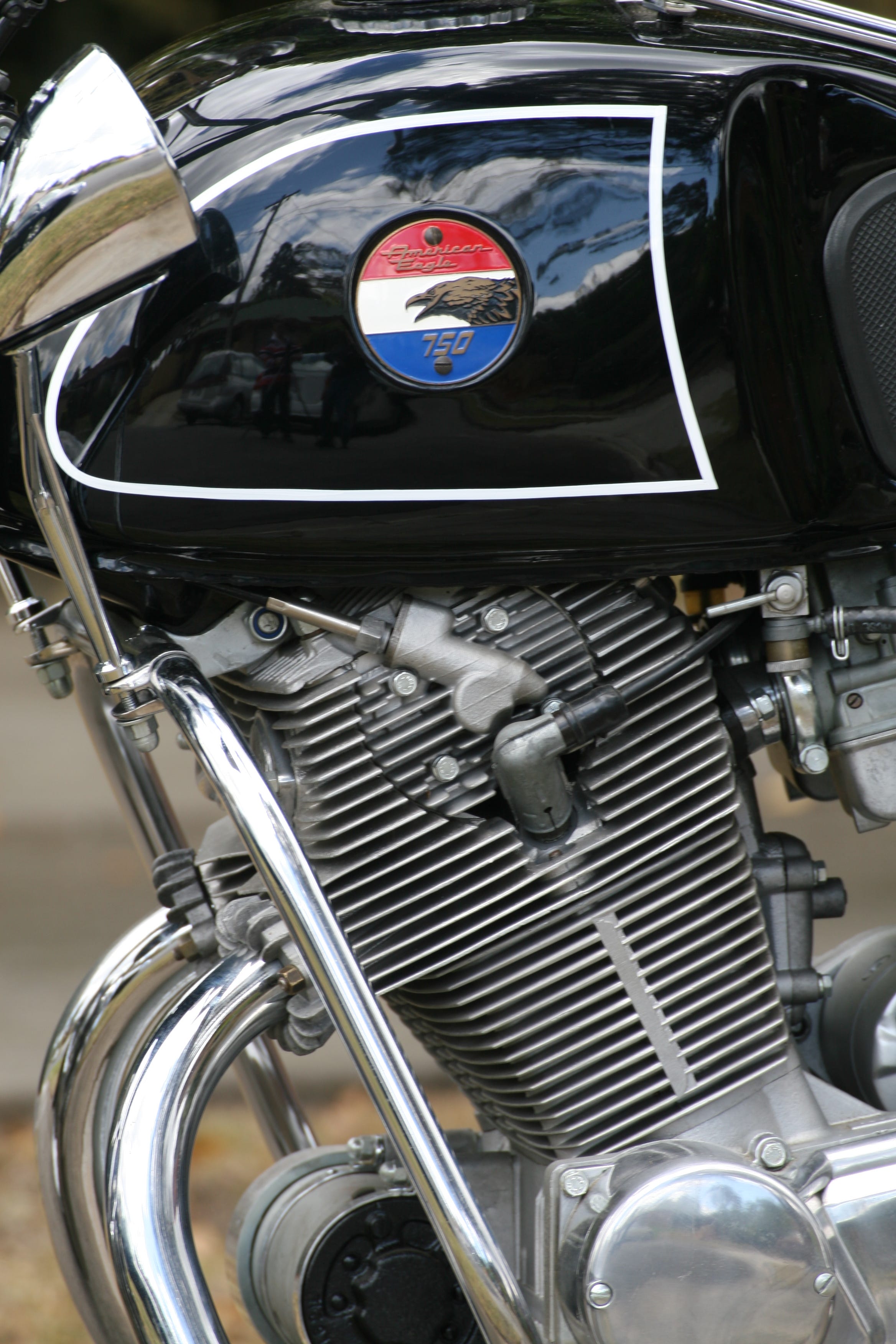
The basis of the Laverda was a 360-degree parallel twin with a chain-driven single overhead camshaft. In 1968 it was one of the most modern large displacement motorcycles available, with horizontally-split crankcases and a unit five-speed gearbox. It was also extremely strong, and built to last.
Laverda’s twin went into production during 1968 and even prior to this McCormack was marketing the 750 American Eagle. McCormack claimed the it was produced at his request and included a number of specific developments, but this was unlikely and wasn’t substantiated.
In one advertisement it stated that an all-American team of experts spent 18 months in research and development and thousands of hours of testing under the most difficult conditions. This included testing from sea level to Pike’s Peak, and from zero degrees in the mountains to 120 degrees in the deserts, through heat, snow, rain and mud. Final assembly was apparently conducted at Santa Ana, but this must have been minimal because apart from the tank badges the American Eagle was very much a Laverda 750.
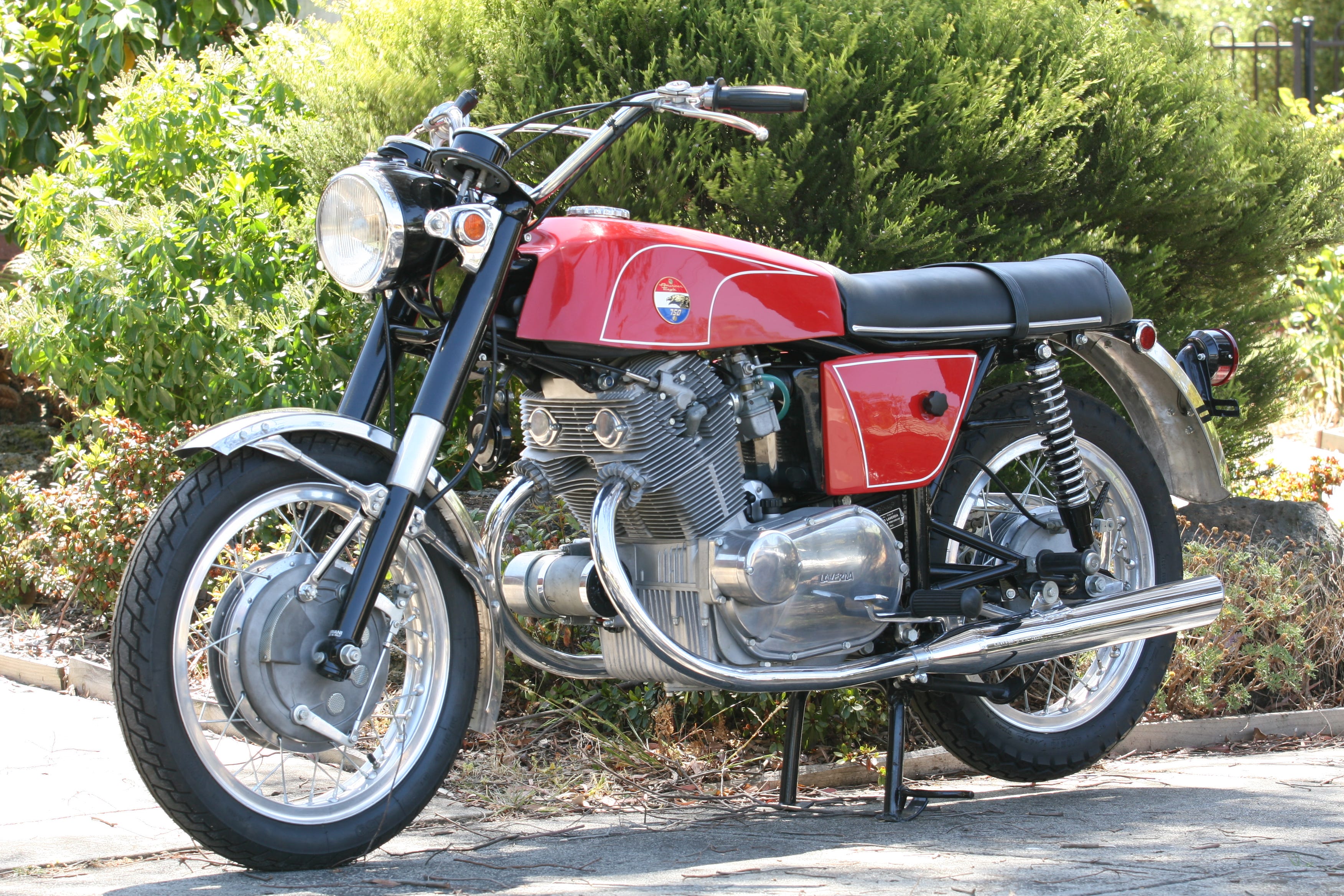
Where McCormack excelled was in marketing. selling a range of ten motorcycles under the name American Eagle, with the Laverda 750 the range leader (others were supplied by Italjet, Kawasaki and Sprite). He promoted purpose-built, stand-alone stores with display windows on three sides and by 1969 American Eagle had over 100 dealers across America. Unfortunately this didn’t translate into sales as the American Eagle 750’s release coincided with that of the cheaper Honda 750 Four. Fewer than 150 American Eagle 750s were sold.
Searching for outside capital McCormack cut a deal with the Minneapolis-based Leisure Dynamics, but this venture failed, and after a couple of years of legal battles the company was liquidated. While the American Eagle saga was a short lived venture, the Laverda 750 twin would remain in production until 1977 and become one of the classic Italian motorcycles of the era.
Look for my good friend Guy Allen’s Substack at allmoto.substack.com.
This book has more information and pictures of early Laverda twins. Laverda Bible
Handsome machine with a bit of a “huckster”
background
Thank you! I’d never heard of this brand! But when I saw the photo I knew it was a Laverda right away. I’ll keep an eye out now