
Ducati 900 NCR
Art and Function


For Ducati’s great engineer Fabio Taglioni, racing was pivotal to success. He grew up in a world where Italian manufacturers dominated and believed Ducati should emulate the success of Moto Guzzi, Gilera, and MV Agusta. Unfortunately, as a government owned company, Ducati’s management was fluid and often unsupportive. There was no guarantee management was even interested in motorcycles, let alone racing, and a particularly low point was after 1973. As the new general manager Cristiano de Eccher actively discouraged racing, Taglioni and his department decided to develop racing machines unofficially. This they did through a subsidiary, NCR.
NCR was established as a specialist race shop back in 1967 by three factory mechanics: Giorgio Nepoti, Rino Caracchi and Rinaldo Rizzi. They set up in via Signorini 16, close to the factory at Borgo Panigale, but soon Rizzi left and NCR became Nepoti Caracchi Racing. After the success at Montjuich in 1973, Fabio Taglioni was determined to persevere with a racing program. Without managerial support, teaming up with old friends seemed the obvious solution. He wanted to win the 1975 FIM Coupe d’Endurance and, running on a shoestring budget, with machines entered through the NCR banner, he very nearly succeeded.
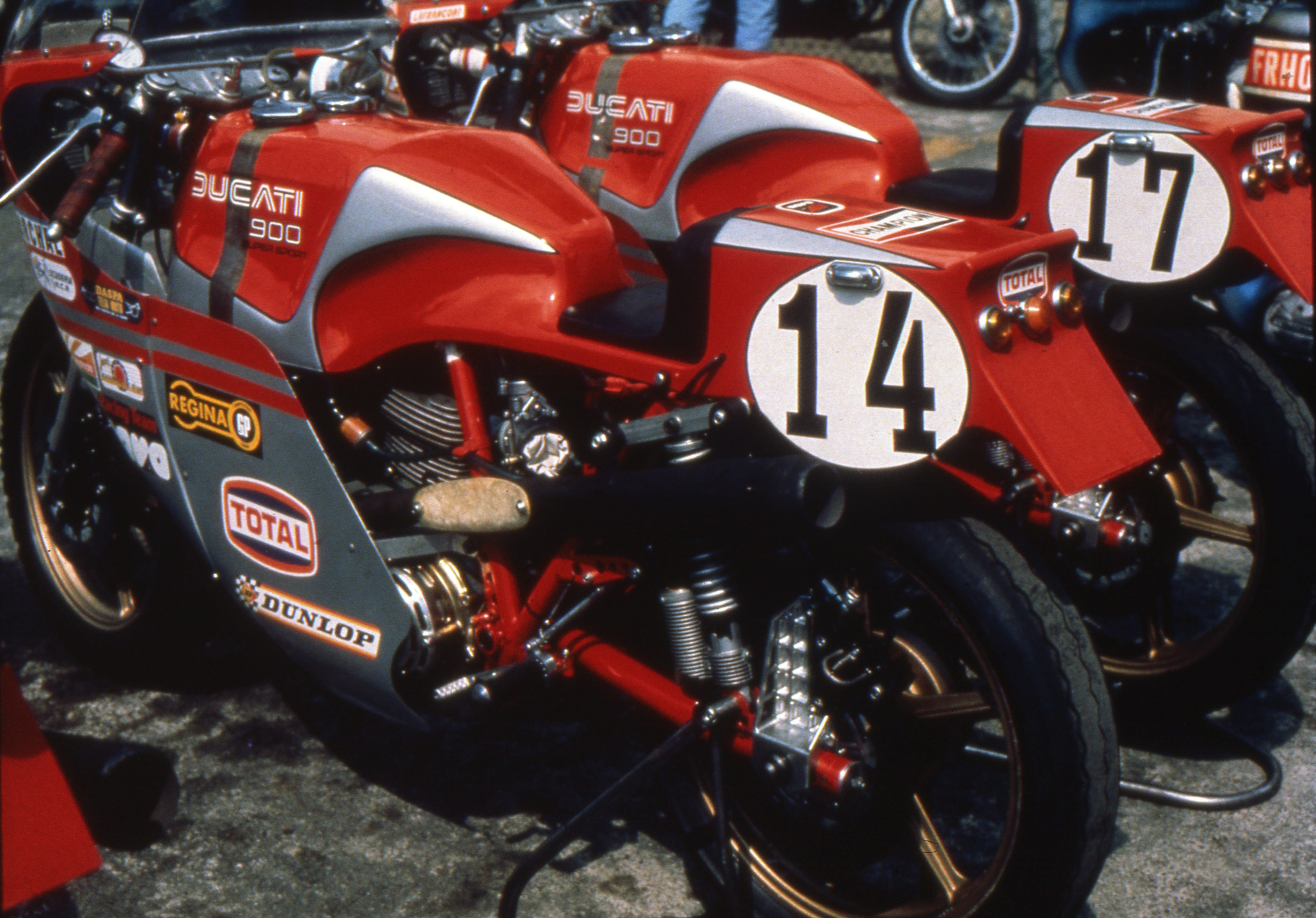
The NCR endurance racers surprised many pundits by winning the first two events in 1975: Montjuich and Mugello. Without full factory backing the Ducatis struggled throughout the season, Benjamin Grau eventually finishing third the championship. This promising result resulted in an increased endurance effort for 1976 and the NCR machines became more specialised.
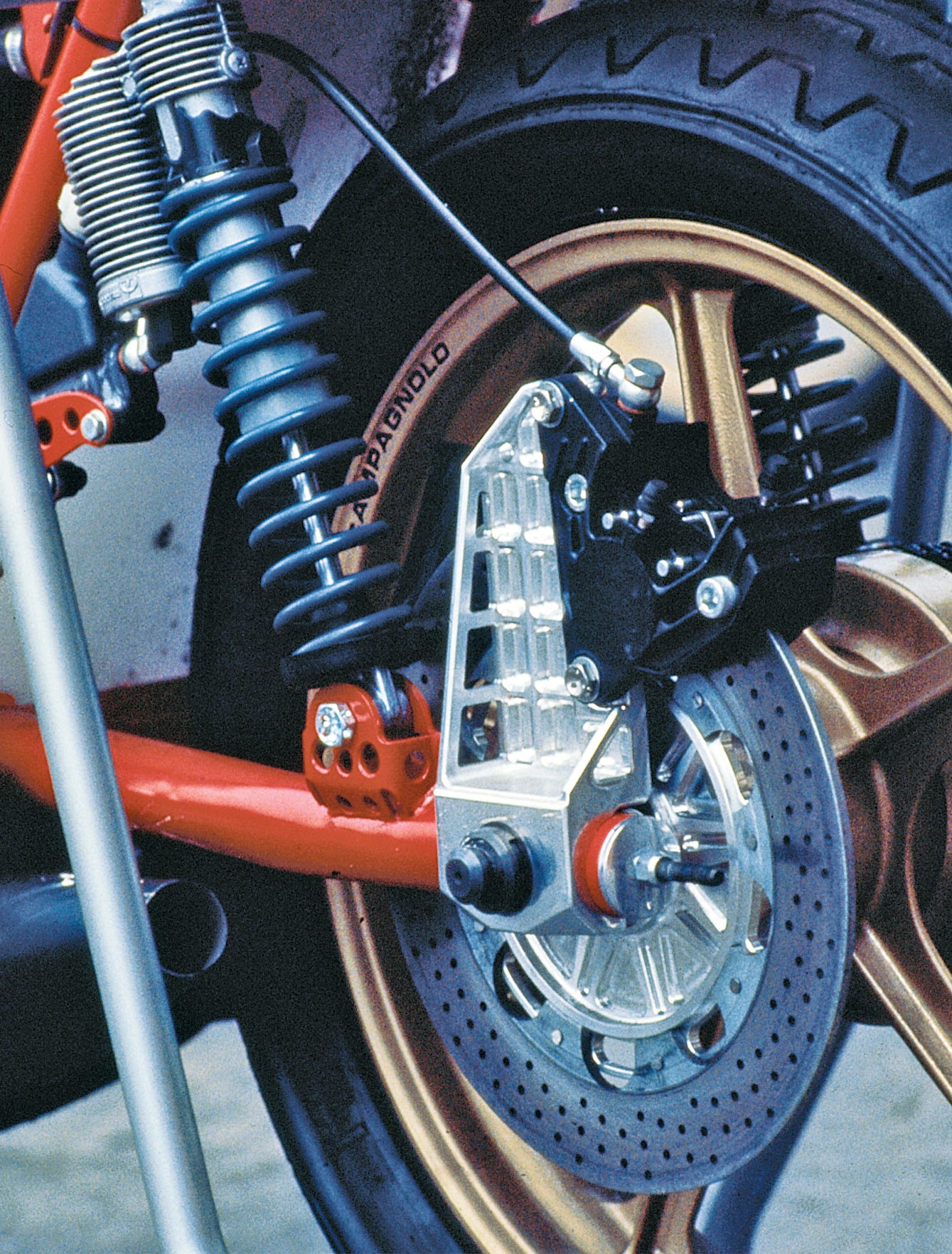
In the details, they were pure works of art. Caracchi, the master of the lathe and milling machine, created beautiful components such as the rear brake caliper support. Nepoti was responsible for the other strength of the NCR, which was its crankshaft. With factory support they created spectacular endurance racing machines, which sharing virtually nothing with any production Ducati.
By 1976 Franco Zauibouri had replaced de Eccher as general manager, and brought a more positive attitude towards racing. Thus, in a bid to win the Coupe d’Endurance, he sanctioned the unofficial development of endurance racers. Although entered by NCR, these were still factory racers. The budget increase was immediately apparent in the improved presentation of the machines. Though favoured to win the Coupe d’Endurance this wasn’t to be as the bikes were too fragile, and no one could have predicted the Honda onslaught that year. It was a similar scenario for 1977 and while the line-up of five NCR machines was impressive, they were still no match for the Honda RCB.
Taglioni still wanted to compete in the Coupe d’Endurance and he knew that, in this highly competitive category, the Ducatis would never beat the might of Honda. So he greeted the advent of the Tourist Trophy Formula 1 race for production-based machinery at the Isle of Man with relish. While the engine stroke had to be retained, there were few restrictions regarding engine and chassis modifications. Taglioni reasoned that ,as he could almost run endurance specification machines in TT F1, the 900 NCR would surely be competitive. With the signing of Mike Hailwood for the 1978 F1 TT, Ducati decided to produce a small number of 900 NCR Formula One machines.
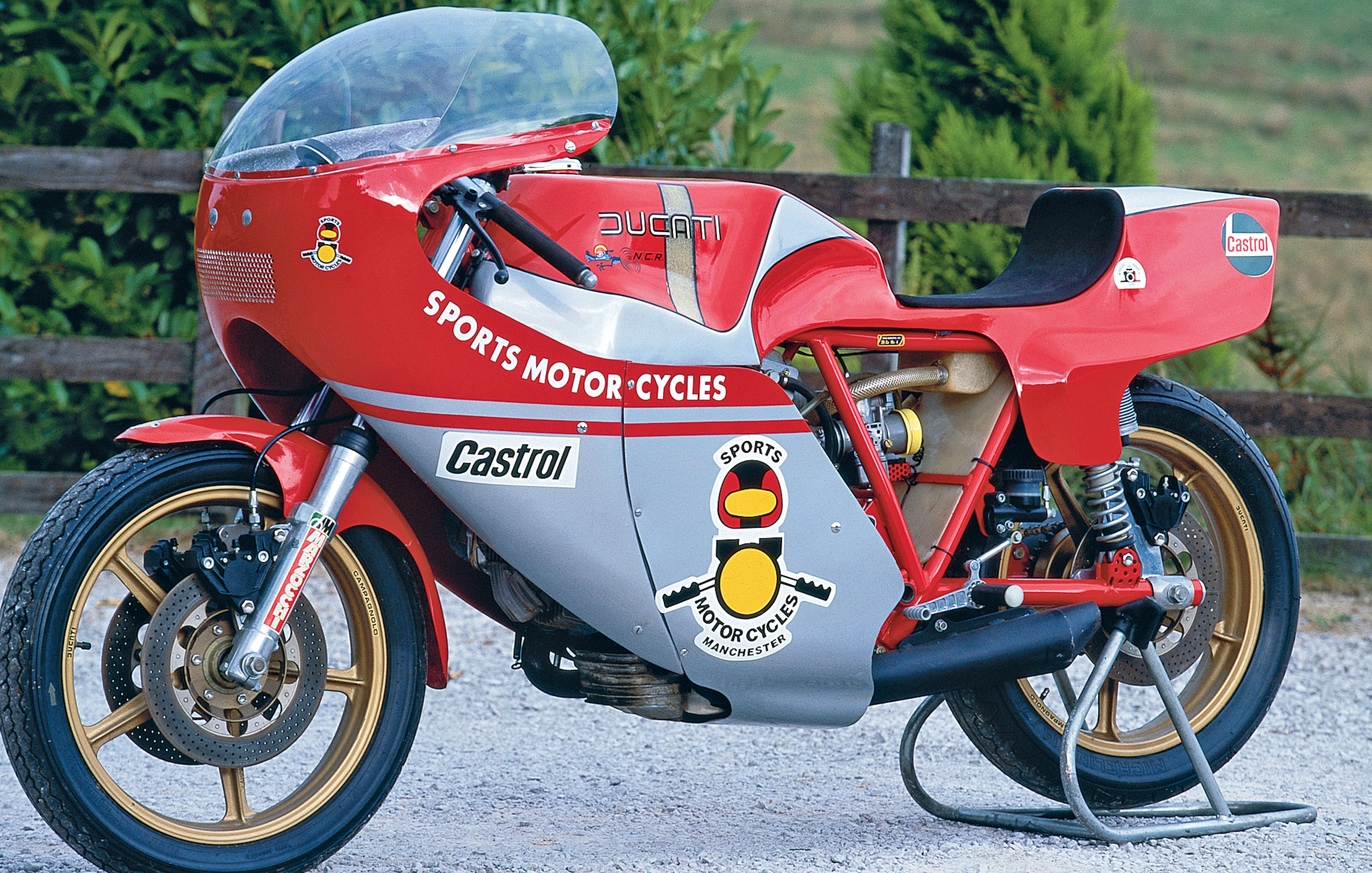
Unlike the endurance racers, the Formula 1 900 NCR was a catalogued model. It carried 900 SS engine numbers and featured specially-cast crankcases incorporating a spin-on oil filter. It retained the earlier 750 bevel-drive layout with battery, coil and points ignition. The engine displacement was the same as the production 900 SS (864cc) also with an 80-degree included valve angle and the same 86 x 74.4mm bore and stroke. Engine updates included larger (44 and 38mm) valves, lighter 10:1 Borgo pistons, 12mm lift desmodromic camshafts, and a lightened crankshaft. The F1 900 NCR also featured a close-ratio gearbox, straight cut primary gears with a dry clutch, and Dell’Orto 40mm carburettors. The claimed output was 92 horsepower at 8500rpm.
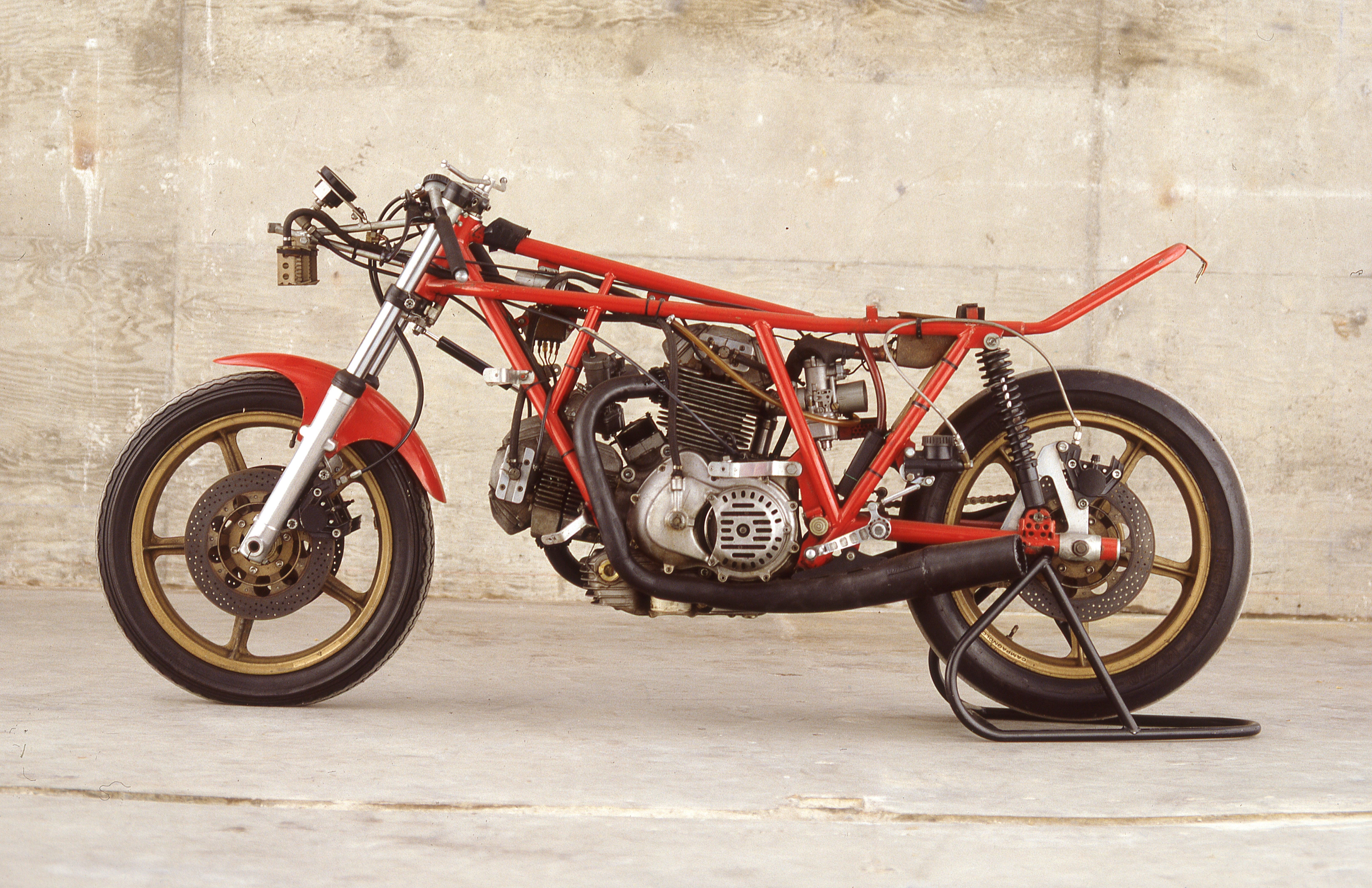
The chrome molybdenum Daspa frame weighed only 12kg, though the suspension, wheels and brakes were less exotic than on the endurance machines. Cavazzi’s quick release wheel system and milled brake caliper mount was absent, as were the magnesium forks and shock absorbers. The wheels were magnesium Campagnolo, and nice touches included vernier adjustment for the milled foot levers and a one-piece fiberglass tank-seat unit in the traditional NCR colors of red and silver. The dry weight was only 160kg and the claimed top speed was over 250km/h.
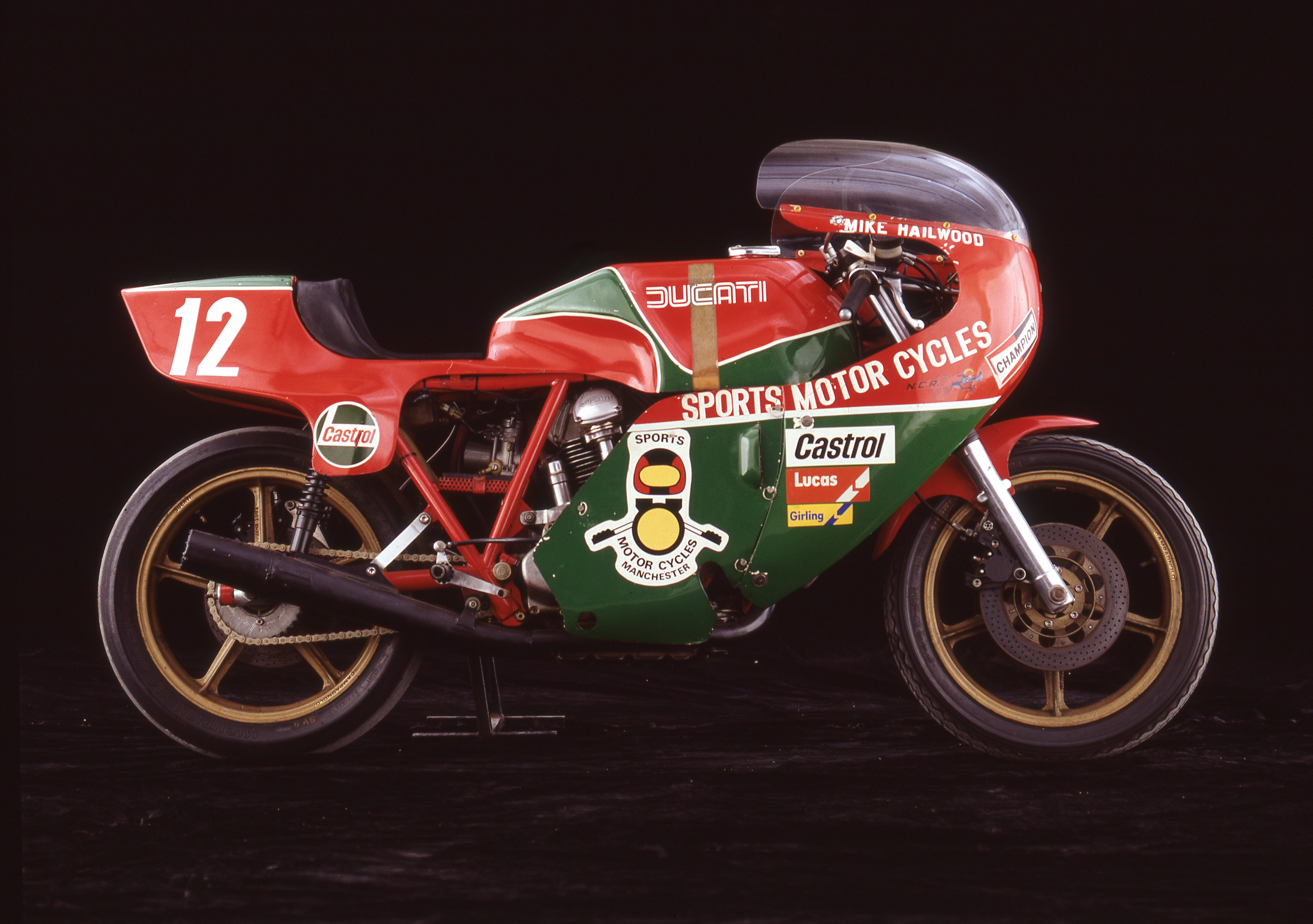
Steve Wynne of Sports Motorcycles in Manchester signed Mike Hailwood for the 1978 Formula 1 TT. He received two NCR 900s, one for Hailwood and one for Roger Nicholls. Wynne had the bikes painted in Castrol colours of red, white, and green and Hailwood won the race in a fairytale comeback, cruising home to win at an average speed of 174.63km/h. His fastest lap was 178km/h and it was an astounding victory, along with a vindication of the 900 NCR’s brilliant balance of power. As with Imola in 1972, the Isle of Man success would be pivotal in the racing history of Ducati. It was Ducati’s first World Championship, and Mike Hailwood their first World Champion.
So pleased was Ducati with the 1978 result that it decided to support an official team for the 1979 Formula 1 and Classic TT. TT F1 regulations now required the engine to be based on the standard square-case 900 SS, while the Classic TT racer featured an endurance type engine with special crankcases and dry clutch. The bikes were disappointing and Hailwood could only manage fifth in the TT1 race. As he refused to race the Classic machine, George Fogarty (Carl’s father) rode it.
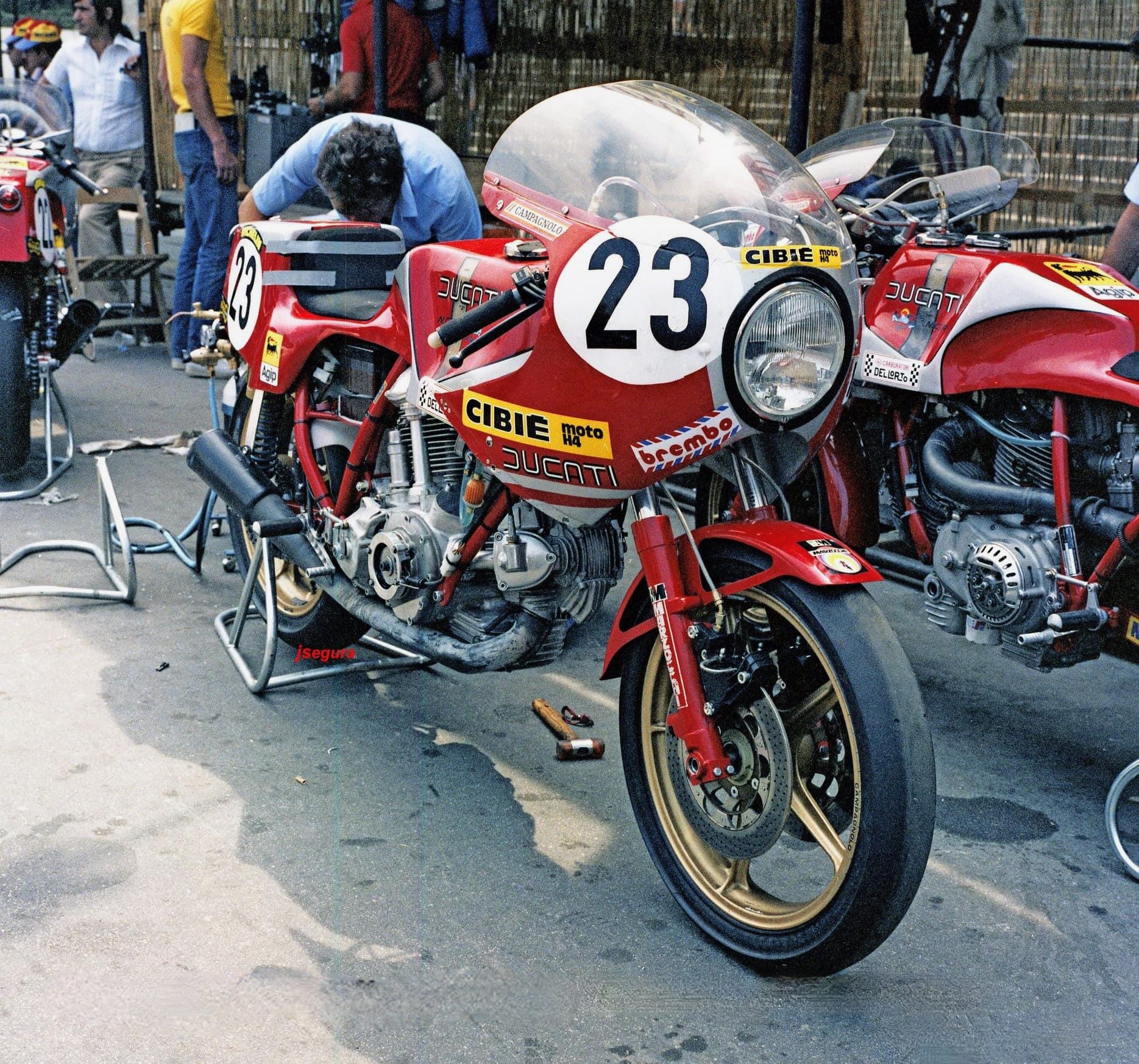
Although the new 900 NCR Formula 1 machines were the most successful NCR racers, NCR continued to develop endurance machines. While these were spectacularly beautiful, they were unreliable. The final victory for the NCR 900 was in 1980, when Jose Mallol and Alejandro Tejedo led the Barcelona 24-hour race at Montjuich.
By 1981 the emerging Superbike class had overtaken Formula 1 and the bevel-drive twin just was no longer competitive. As some of the most beautiful Ducatis ever created, the 900 NCR remains a testament to the creativity and artistry of the engineers that designed and built it.
Look for my good friend Guy Allen’s Substack at allmoto.substack.com.
All Ducatis are covered in this book
How important was Franco Farne at this point? Seems he was a pivotal figure with quite a bit of staying power.