

It seems that Ducati’s centenary is a gift that keeps giving. One of the more interesting series of limited editions is the Collezione 100, this comprising ten motorcycles inspired by historic events and each produced as 100 examples. Although released in May 2026, these are also for 2027 Model Year. The Collezione idea is sound, but the choice of ten historical events, and the chosen donor bikes, certainly got me thinking.
There is no argument around the inclusion of the Panigale V4S 100, inspired by Paul Smart’s 1972 Imola 200 750 Desmo. This event was unquestionably one of the most significant, if not the most significant, racing successes in Ducati’s history, and it’s appropriate that the Panigale V4S was chosen as a donor bike.
The choice of the second centenary model does ask some questions. While the Panigale V2S is suitable, Ducati claim the inspiration is the 1975 750 Super Sport Desmo that Franco Uncini rode to victory in the 1975 Italian 750cc Production Championship. The problem is that Uncini didn’t ride a 1975 “square-case” 750 SS, but a 1974 750 SS “Green Frame”, painted yellow. And while Uncini’s performance was admirable, does it really justify a top ten placing?
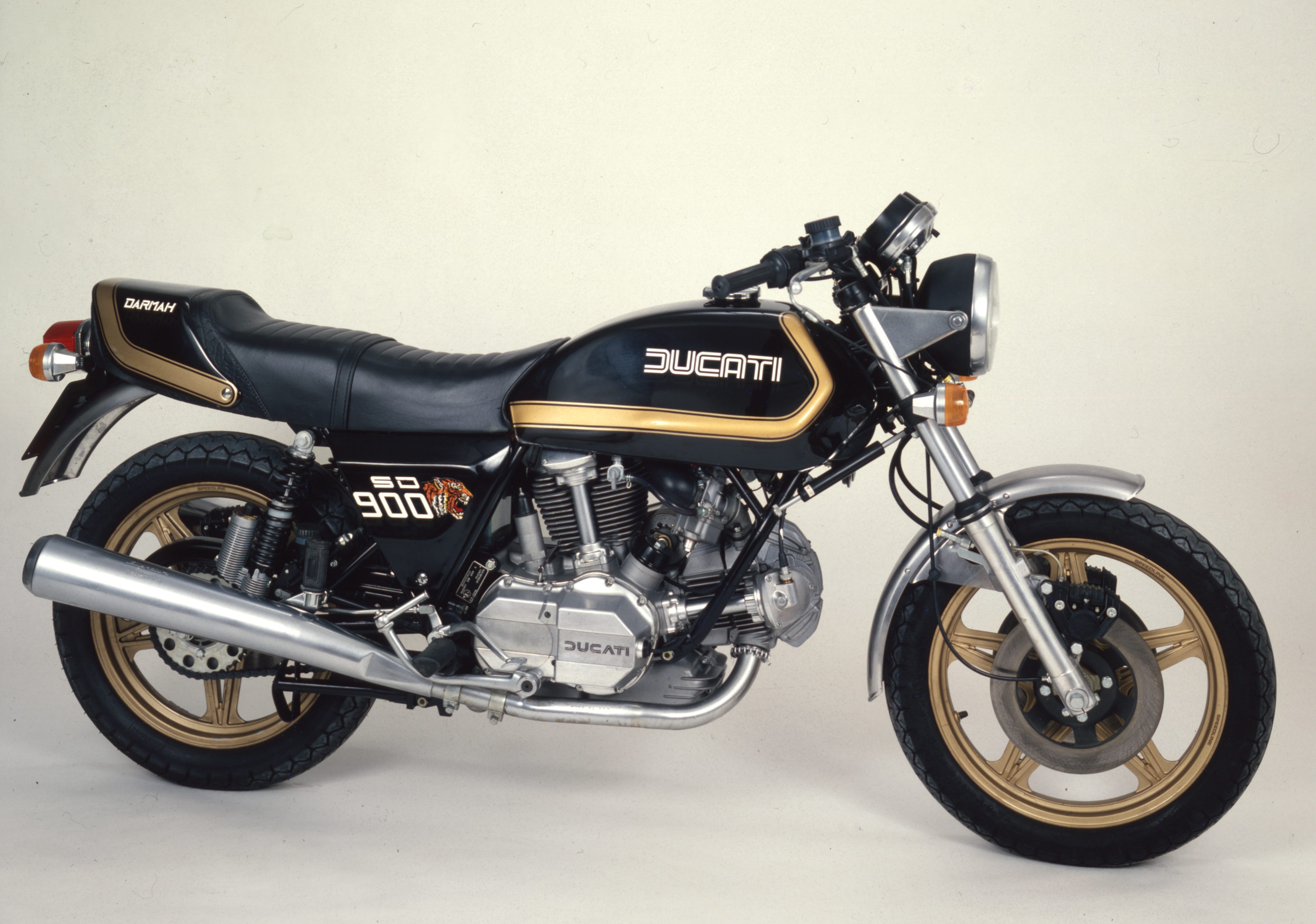
Coming to the third centenary model, the 1979 900 Sport Desmo Darmah. Ducati goes on to say, “In the 1970s and 1980s, black and gold graphics were extremely fashionable in the world of motorsports, and Ducati was no exception. Specifically, it applied this colour scheme to the 900 Sport Desmo Darmah, essentially a Streetfighter before its time. In Italy, there was also a strong fascination with exotic countries, a fascination that translated, in Borgo Panigale, into purely fictional names like Darmah, or details such as the distinctive tiger head depicted on the side panels of the 900 Sport Desmo Darmah.”
I am well versed with the 1979 900 SD, having bought one new from Lloyd Chapman Motorcycles in Perth, Western Australia in June 1979. I don’t argue that black and gold graphics were fashionable at the time, but the Darmah was not really comparable to a modern Streetfighter. It was an evolution of the 750 GT-style sport-tourer, a style that has since been replaced by a multitude of more specialised models. And while I still have a soft spot for the Darmah, I don’t see it as one of the ten most significant models, in Ducati’s history.
The choice of the 2008 Monster S4Rs Tricolore as an inspiration for the centenary is also unconvincing. The Monster S4RS Tricolore is in a similar category to the 900 SD Darmah, possibly recognisable and iconic, but hardly a top ten model.
Cook Neilson and Phil Schilling’s 750 Super Sport “California Hot Rod” 1977 is definitely a top ten. Ducati says, “In the mid-1970s, Ducati’s visibility in the United States was essentially limited to just one model, the Scrambler, a quasi-off-roader imported by the Berliner brothers, but things changed in 1977 thanks to Cook Neilson’s memorable triumph on the Daytona oval track.” Considering Berliner stopped importing Scramblers in 1972 I don’t really understand this. During the early seventies Berliner imported thousands of 750 and 860 V-twins, and these were very successful. The “California Hot Rod” was built out of a 1974 750 Super Sport “Green Frame”, a model that has more in common historically with a Superleggera V4 than the XDiavel V4 100

Similar irregularities are evident with the Diavel V4 RS 100, this inspired by the 1979 900 Replica. The 900 Replica was itself inspired by Mike Hailwood’s 900 NCR that he rode to victory in the 1978 Isle of Man Formula 1 Tourist Trophy race. Ducati says “The distinctive green and red livery with white stripes, also represents the very first example of an “almost” Italian-style colour scheme.” Hailwood’s 900 NCR was actually delivered in red and silver NCR colours, and painted by Steve Wynne of Sports Motorcycles in red, green and white Castrol colours due to Castrol’s sponsorship of the team. While the Diavel V4 RS 100 is based on the higher performance Desmosedici Stradale-powered Diavel V4 RS, it is difficult to see a close association with the racing style 900 Replica.
Another top ten Ducati I’m familiar with is the 1979 500 SL Pantah. I owned two 500 SLs in the early 1980s, and while the Pantah engine design was extremely significant, still continuing today, I wouldn’t place the early Pantah amongst the greatest ever Ducatis. While the Multistrada V4 RS 100 is a wonderful high performance touring motorcycle, the 500 SL Pantah was basically underwhelmingly, both in engine performance and handling.
I don’t know why Ducati always refers to the 1962 250 Scrambler as the most important model in America in the 1960s. In 1962 Ducati built 24,443 motorcycles, of which only 417 were 250 Scramblers for the USA. Ducati says, “Berliner requested an off-road dirt track bike from Ducati, a concept that hadn’t previously been envisaged in Borgo Panigale.” Someone forgot they made over 2500 examples of the 175 and 200 Motocross in 1960 and 1961. At least the modern Scrambler Nightshift is a realistic basis.
So we come to another of Ducati’s major race wins of the 1970s, the 1973 and 1975 24 Horas de Montjuïc. In 1973 the Ducati 860 made its winning debut with Salvador Canellas and Benjamin Grau, and they repeated this in 1975 with a 905, now painted the red and silver of the NCR team. While certainly a top ten result, associating the 1975 Montjuïc racer with a Hypermotard V2 SP is a stretch.
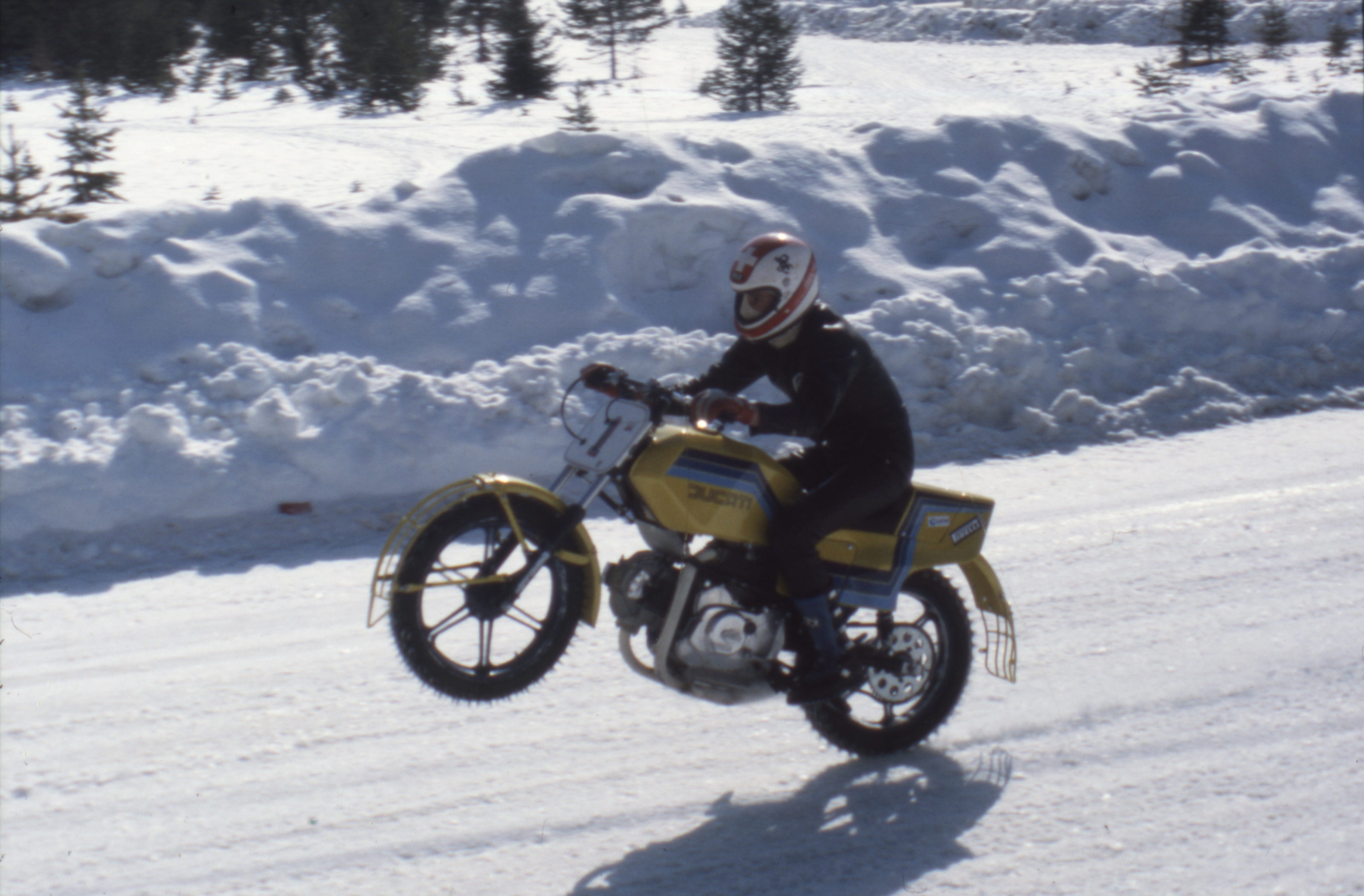
The final top ten is the 1981 Pantah “Ice”. Even Ducati finds this baffling, saying the “1981 Pantah Ice is one of the most curious examples of product placement in Ducati’s history”. This was basically a modified Pantah 500, characterized by the addition of studded tyres and the removal of the braking system, so that it could be used on ice tracks. In the early 1980s EFIM, the body that controlled both Ducati and Alfa Romeo, organized a championship for Alfasud cars on the ice tracks of the Alps. The races were held in two heats; during the break between the first and second races, the brightly coloured Pantah “Ice” bikes put on a show for the crowd. While not exactly a top ten historic event, at the least the DesertX is a suitable donor bike.
So there we have the Collezione 100. Ten moments in Ducati’s 100-year history, and nothing before 1962
.
Bizare.
Tortured associations to promote current models (and come up with cool paint schemes).