

One of the most notable aspects of Ducati’s change in marketing strategy in recent years is the plethora of limited editions. Some of these are higher specification than the standard bike they are based on, but many are ostensibly expensive paint jobs. Ducati’s first limited edition numbered model was the 1986 750 F1 Montjuich, this celebrating the TT1’s racing success in the 1983 Barcelona 24 hour race. Benjamin Grau, Enrique de Juan and Luis Reyes took the victory, but this was an obscure non-championship event. There were no Japanese entries, and the victory received virtually no publicity.
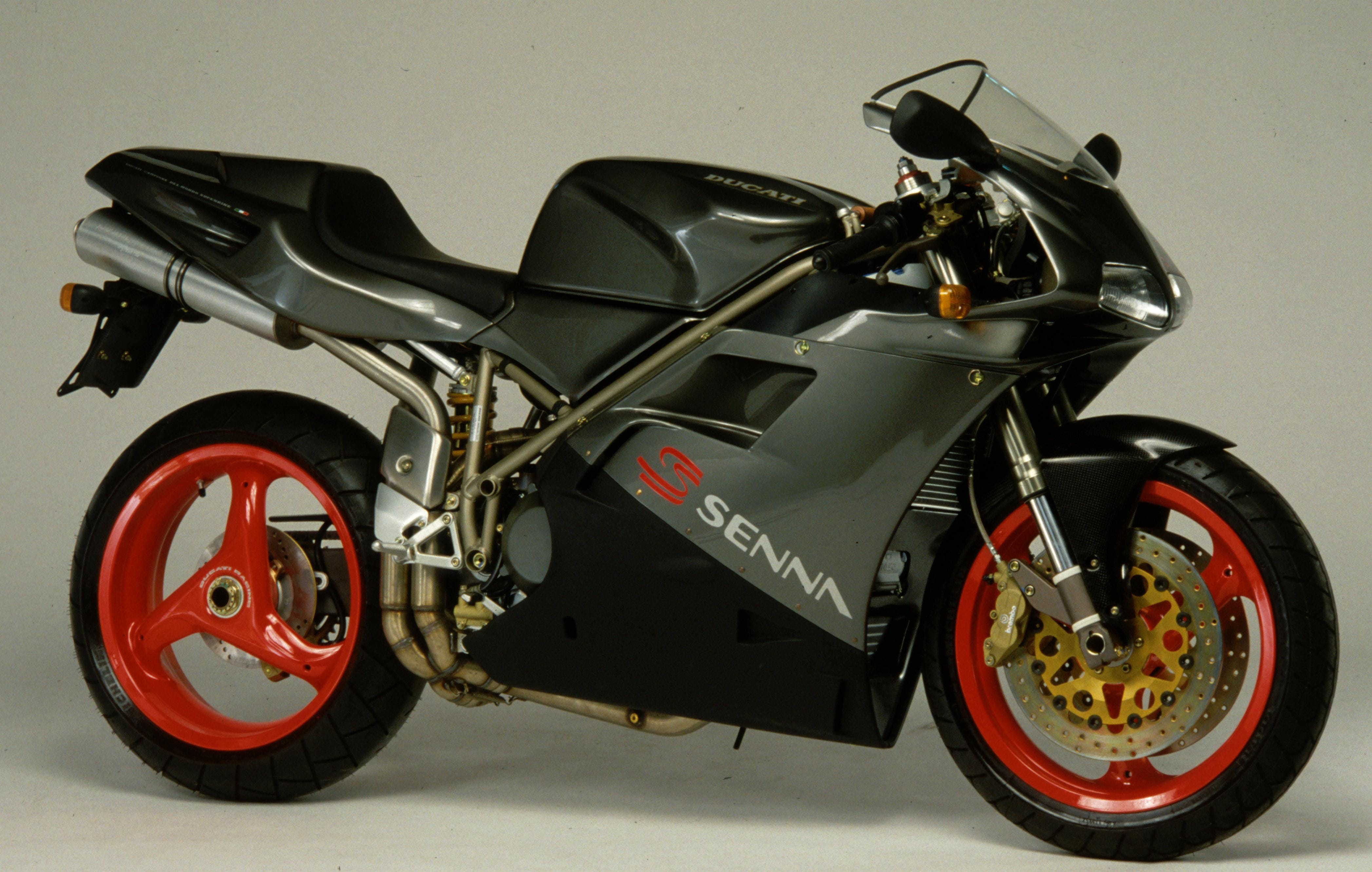
Over the next few years Ducati released more numbered limited editions, and these were invariably higher performance special editions like the Sport Production 851 and 888 series. All the Sport Production series offered a significantly higher engine and chassis specification to the standard 851 and 888. This changed in 1995 with the first 916 Senna. For the 916 Senna Ducati took a standard 196 Strada, added an Öhlins rear shock absorber, replaced the Biposto seat with a Monoposto, painted the wheels red and gave it silver grey paintwork. They also provided a numbered plaque for the 300 examples offered. The Senna proved so successful it was eventually produced in three editions. As it was basically a standard 916 Strada sold at a premium price, the 916 Senna provided Ducati a profit template that was hard to ignore.
Over the years numbered limited editions have expanded almost exponentially. Every year has seen more limited editions introduced; none more so than 2026, Ducati’s centenary year. This centenary has nothing to do with motorcycles, but celebrates Ducati’s establishment as an electronics company in 1926. So it is really celebrating the manufacture of radios, vacuum tubes and capacitors. Long before Ducati motorcycles were even conceived, Ducati was also known for cameras, lenses, cash registers and electric shavers. But cash registers and capacitors aren’t quite as sexy as motorcycles so Ducati’s centenary celebration is all about motorcycles, with the oldest of the Collezione 100 based on the 1962 Scrambler. It seems a centenary is really only 64 years.
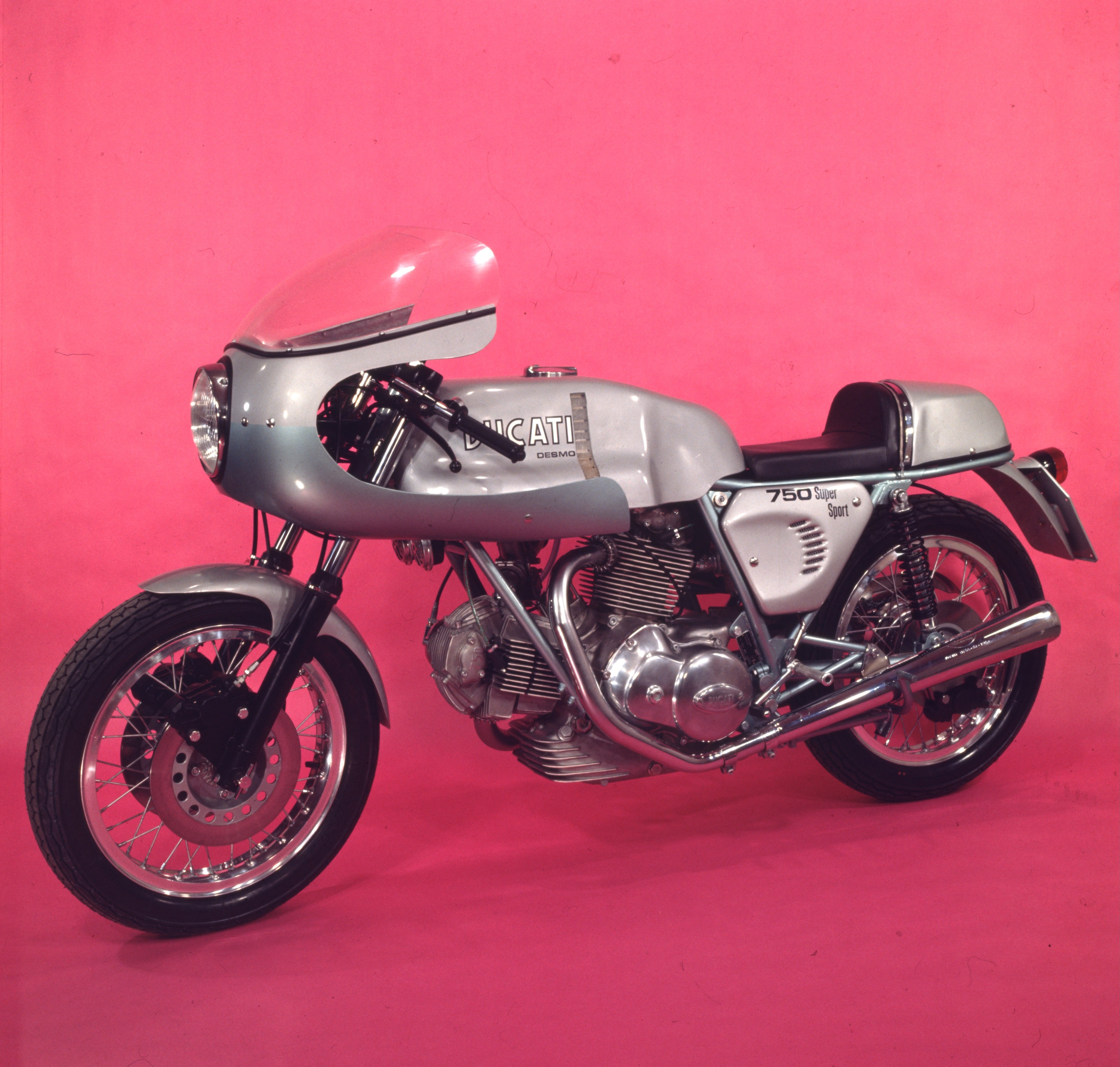
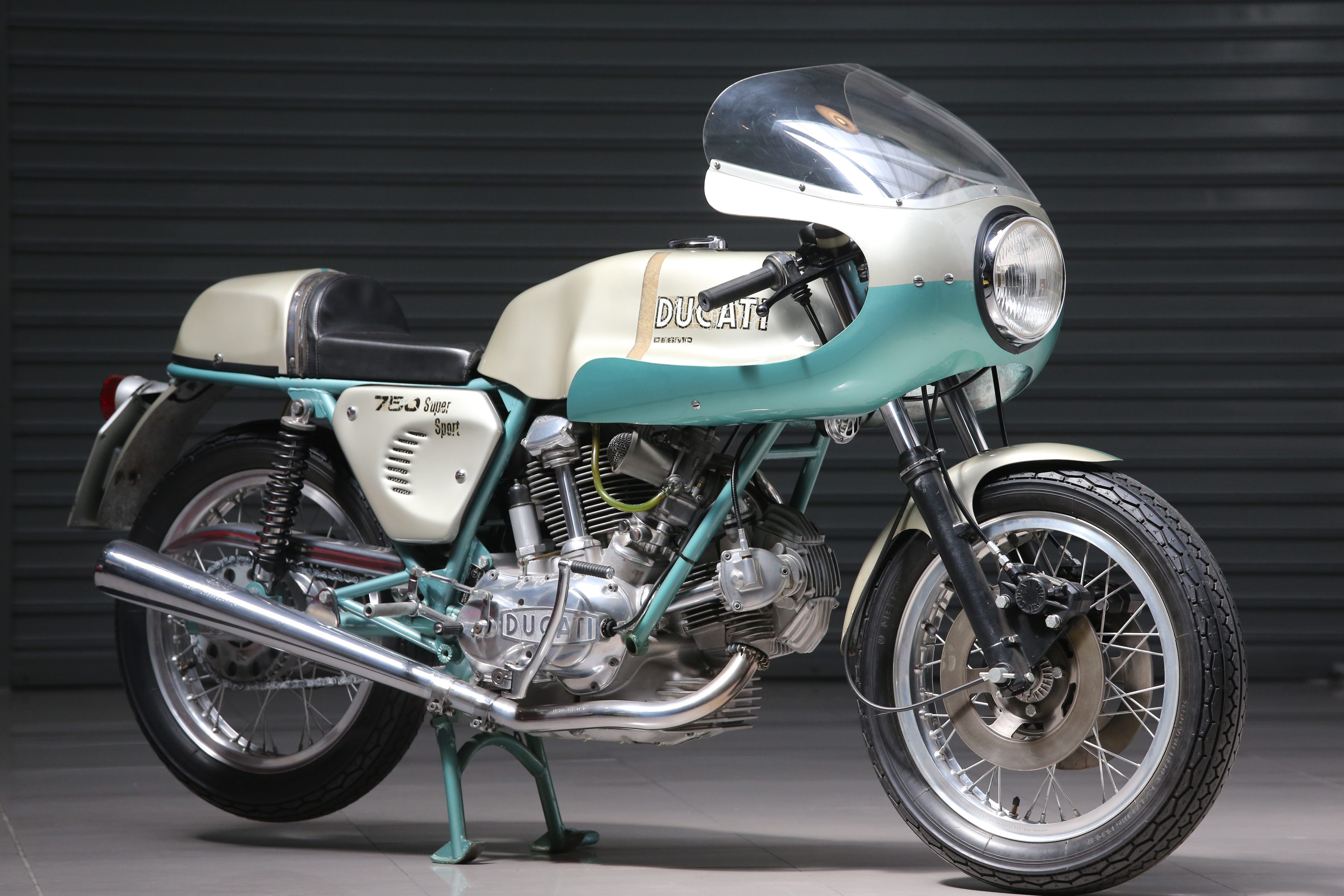
As part of these centenary celebrations, Ducati also introduced the Formula 73, celebrating one of the marque’s most significant models, the desmodromic 750 Super Sport. There were some anomalies in the Formula 73 description. The press release stated the 750 Super Sport was the first Ducati road bike equipped with a desmodromic valve timing system. Someone misread the history books, unaware of the range of desmodromic overhead camshaft singles that were introduced in 1968, and continued until 1974. It was also claimed the Formula 73 was a contemporary interpretation of the 1973 750 Super Sport as shown at the Milan Show in November 1973. This bike was actually a one-off prototype as the 750 Super Sport wasn’t officially available in 1973, or even listed in Ducati’s official 1973 production data. Only two prototypes, and a handful of pre-production examples, were built in 1973 before limited production commenced early in 1974.
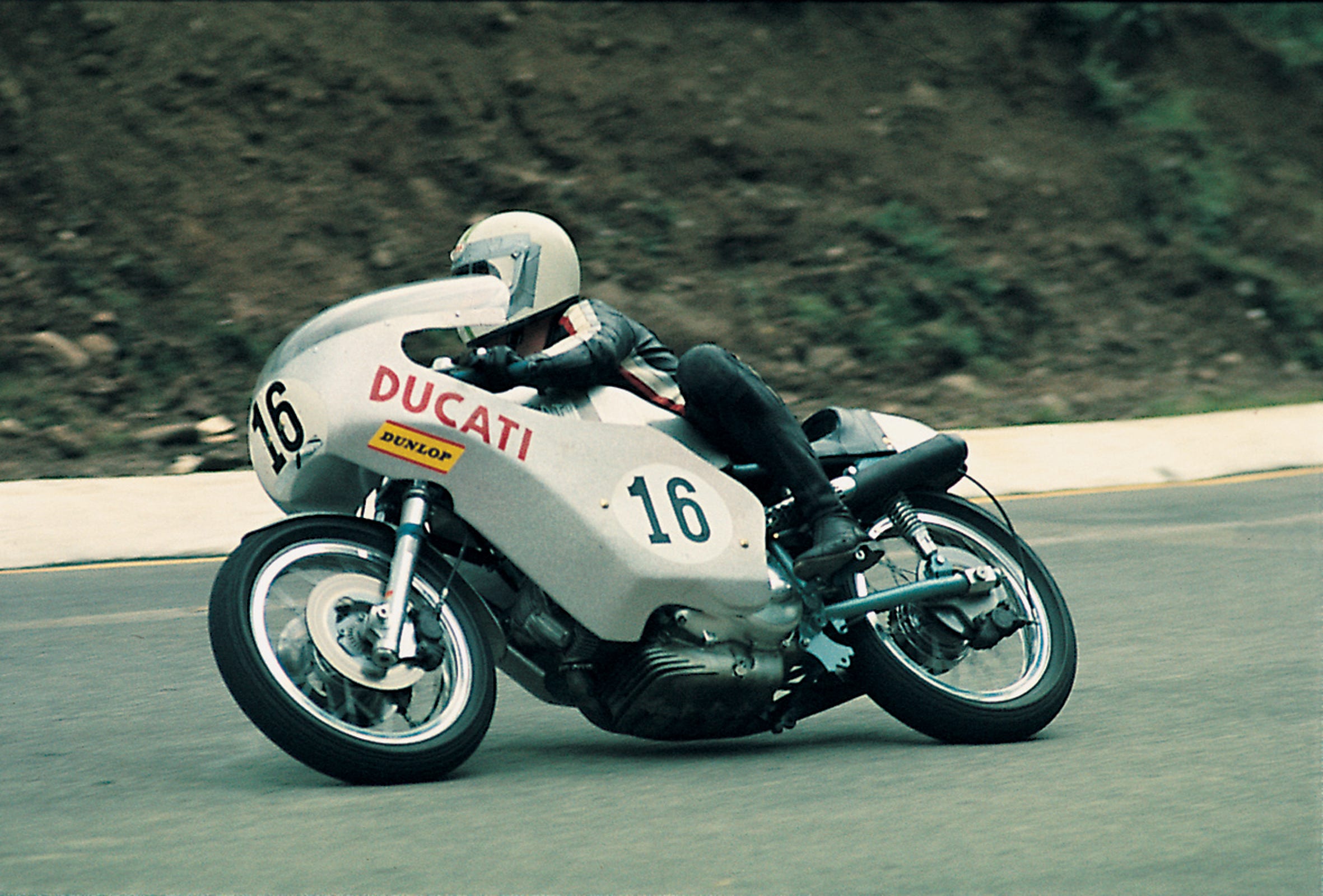
The first 750 Super Sport was a replica of the Paul Smart and Bruno Spaggiari’s 750 Imola Desmo that triumphed in the 1972 200 Miglia di Imola, the first European competition for production-derived motorcycles. The victory at Imola, and the subsequent release of the 750 Super Sport Desmo represented the beginning of Ducati’s legend in production-derived racing, which continues today.
When the production 750 Super Sport was released in 1974, it was also an homologation special for production racing, and surprisingly close in specification to the Imola racers. As a higher performance homologation model, the 750 SS sat at the top of Ducati’s range, much as the Panigale V4R does today. It was also an expensive, limited production race replica, albeit without a numbered plaque on the top triple clamp. Designed as production racer that could be ridden to the track, the 750 SS was also the only desmodromic twin-cylinder in Ducati’s 1974 line-up. When the round-case 750 engine finished during 1974 the 750 SS was left as the only desmodromic round-case twin.
Rather than offering a modern high performance tribute to the legendary 1974 750 Super sport the Formula 73 is more of a custom rendition. Combining minimalist and elegant styling, and the Scrambler air-cooled twin-cylinder engine and basic specification chassis, the Formula 73 is an aesthetic, rather than performance, contemporary reinterpretation of the 750 Super Sport Desmo. The Formula 73 is more about looks than performance.
Ostensibly the engine and chassis is shared with the Scrambler. With a Termignoni silencer specifically designed to the Formula 73, the two-valve air-cooled desmodromic 803cc Desmodue engine produces 73bhp at 8250 rpm, a figure not dissimilar to the 1974 750 SS.
The Scrambler steel trellis frame is painted in aqua green, not exactly the same shade as the diesel engine paint on the original “green frame”, and the suspension features a 41mm Kayaba front fork and Kayaba Monoshock. The 17-inch wire spoked wheels include aluminium rims and the front brake is a single 4-piston Brembo radial caliper with a 330mm disc. Compared to the 750 SS’s triple disc arrangement that was class-leading in 1974, the Scrambler single front disc is underwhelming. Whereas the 750 SS represented the end of an analogue era, even continuing with points and coil ignition, the Formula 73 includes a modern electronic suite, with traction -control, cornering ABS, a quick-shift system and two riding modes.
Many details of the Formula 73 contributed to providing a bespoke custom concept. The silver and aqua green colour scheme is inspired by the original, with a vertical gold tank stripe echoing the original unpainted strip on the 750 Imola Desmo for instant fuel level checking. The clip-on handlebars with bar-end mirrors, and the short, tapered fairing and tail emphasise a Café Racer appearance. Billet aluminium components, such as the brake and clutch levers with oil reservoirs, footpegs and Rizoma fuel cap further accentuate the custom style. The wet weight of 183kg is also remarkably close to the original 750 SS.
Whereas the original 750 SS was built for homologation, with a total of 401 built in 1974, the Formula 73 is produced in a limited series of 873 numbered units. Each Formula 73 features a numbered plaque, a certificate of authenticity, along with a collection of period images and sketches presented in a special box. Sort of like a toy instead of the real thing.
Look for my good friend Guy Allen’s Substack at allmoto.substack.com.
All Ducatis are covered in this book
Nailed it… toys
Thanks for the chuckles, good stuff.
Yeah, seems to me Ducati anniversaries should be based on 1949– the year the first complete motorcycle rolled out of the factory.