

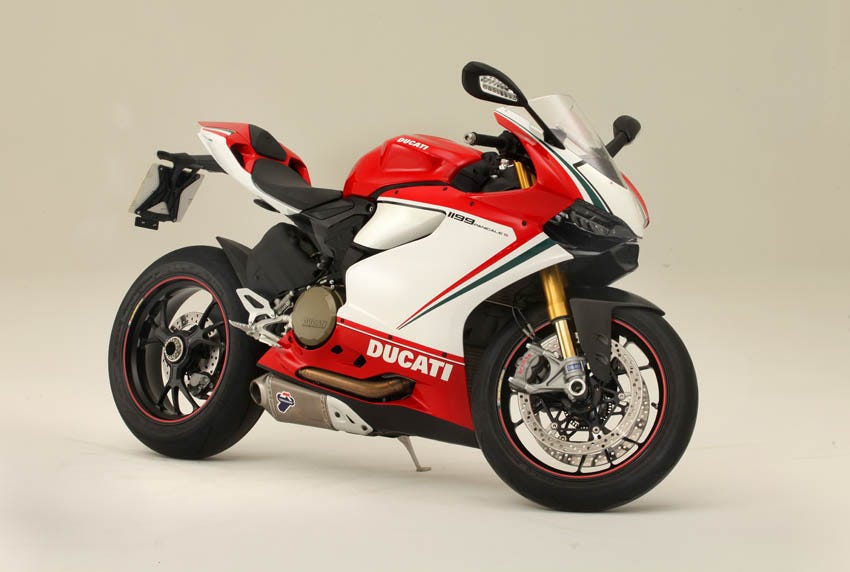
Although most of Ducati’s engine designs generally enjoy a long production span, throughout its history the maker has also introduced engine designs that have only lasted a few years. Some of these were particularly significant, notably the round-case 750 that only lasted three years, before being replaced by a design that was cheaper to manufacture. More recently Ducati introduced the Panigale Superquadro twin, arguably another design that would have been expected to survive longer, only to see this also replaced by a V4 and a more economical V2.
In the early 2010s the 1198 Testastretta was still a significant force in World Superbike, as evidenced by Carlos Checa’s 2011 Championship victory. But by 2012 the Testastretta had reached the limit of Ducati’s traditional evolutionary development. With a lineage lasting twenty-five years, the basic engine architecture traced back to the 500cc Pantah, with many design features going back even earlier. Some, like the vertically split crankcases and ball main bearings, harked back to the 1954 Marianna. It was time for Ducati to replace their traditional process of evolution with one of revolution. The resulting Superquadro (oversquare) engine was all new, only Fabio Taglioni’s 90-degree L-twin configuration and Desmodromic valve control retained from earlier designs.

The Desmosedici RR inspired much of the engine design; the crankcases incorporating the cylinder outer water jacket with individual wet-liners inserted into the crankcase apertures. This design enabled the cylinder heads to be secured directly to the crankcase. Shell main bearings now supported the crankshaft, allowing more rigid larger diameter crank journals. Lubrication was uprated with a MotoGP-style vacuum oil pump that maintained constant vacuum in the crankcase underneath the pistons, controlling the internal crankcase pressure.
Initially an 1199, the bore and stroke of 112 x 60.8mm were the most oversquare of any production motorcycle engine, and allowed for larger, 46.8 and 38.2mm valves. Ducati’s traditional desmodromic system was ideal for the Superquadro’s high rpm and large valves, the mechanical actuation allowing the rocker arms to follow cam lobes with steep profiles and radical valve timing. A ride-by-wire digital throttle, the first for a production Ducati Superbike, controlled the twin injectors per cylinder in new Marelli 67.5mm oval throttle bodies. Also, for the first time on a Ducati Superbike, was a wet oil-bath slipper clutch featuring a self-servo mechanism that compressed the friction plates when under drive from the engine.

Perhaps the most radical new design feature was the replacement of the toothed belt-drive camshaft system, first introduced with the Pantah in 1979. The long duration double overhead camshafts were now operated by a combined chain and gear-drive arrangement. A conventional chain ran from the crankshaft to the cylinder head where a single sprocket positioned between inlet and exhaust camshafts was attached a gear meshing with gears on the ends of both camshafts. This was the first time Ducati had used a chain for the camshaft drive since the ill-fated parallel twin of 1975. An innovative decompression system allowed for a smaller battery and starter motor, despite the monster pistons. The Superquadro set a new standard for a twin, producing 195 horsepower at 10,750rpm, 25 horsepower more than the 1198.

Another significant departure from convention was the chassis, a diecast hollow aluminum monocoque replacing the traditional tubular steel. This chassis was strongly influenced by the MotoGP Desmosedici carbon fiber frameless type first introduced during 2009, and Ducati patented the Panigale type in 2010. Weighing just 4.3kg, and doubling as airbox containing the air filter and throttle bodies, it still utilised the engine as a stressed member. The frame was responsible for half the 10kg weight saving over the 1198. The Superquadro engine was rotated backwards, with the front cylinder now 21 degrees from horizontal. This enabled the engine to be positioned 32mm further forward, improving front/rear weight distribution. Attaching directly to the rear of the engine, the new fully die-cast aluminum single-sided swingarm was 39mm longer than the 1198, increasing the wheelbase to 1437mm and also contributing to the weight distribution of 52/48 percent front and rear. With the engine basically the frame, as in the legendary Vincent twin, the entire package was extremely compact and concentrated.
Weight saving measures extended to the exhaust system relocated below the engine, allowing a lighter aluminum rear sub-frame, and a magnesium front sub-frame supporting the headlamp, instrumentation and fairing. These also had the added bonus of centralizing mass to improve agility. The weight was only 164kg. As the most radical new design to ever emerge from Borgo Panigale, the 1199 had a lot to live up to. It needed to look to the future while maintaining Ducati’s traditional ethos. And the Panigale provided a brilliant solution; tradition was maintained through the 90 degree engine layout with desmodromic valve actuation combined with a radical new approach to engine and chassis architecture.

While the Panigale Superquadro promised much, it generally failed to deliver. The Panigale 1199 grew to 1299 for 2015 and the 1199 continued as Ducati’s spearhead Superbike until the Panigale V4 was introduced for the 2019 season. Between 2012 and 2021 Ducati failed to win the World Superbike Championship, their longest drought in this championship’s history.
Although the Panigale 1199 wasn’t as a successful racer as Ducati hoped, the smaller 955cc Panigale Superquadro V-twin proved exceptional. Introduced in 2016, it won two World Supersport Championships and, in the hands of Josh Herrin, triumphed in four successive Daytona 200 races. Michael Dunlop provided Ducati its first Isle of Man TT victory in thirty years when he won the 2025 Supersport race on a Panigale 955.
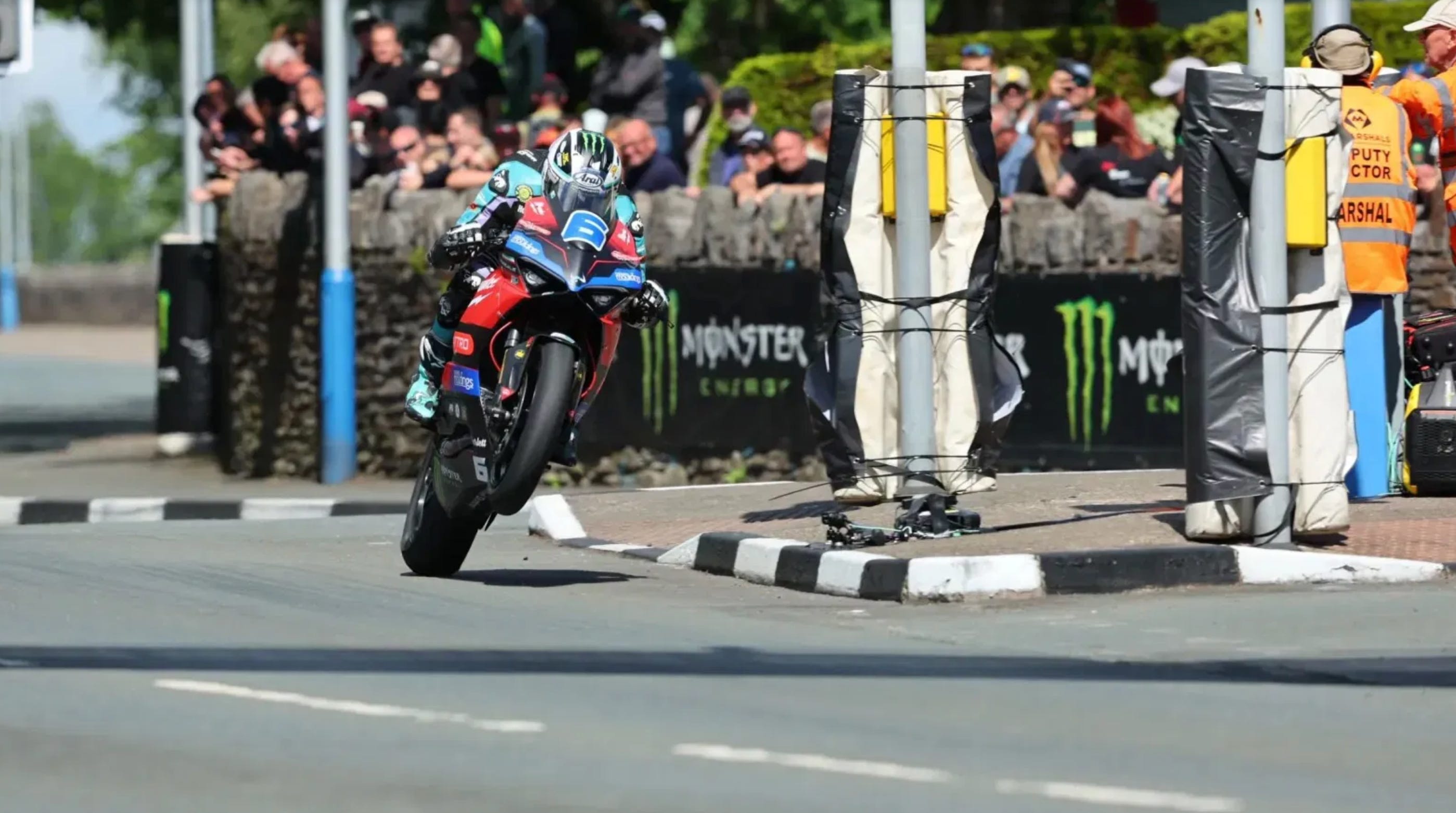
This racing success still wasn’t enough to save it from replacement. The Panigale 1299 finished in 2019, and the Panigale 955 in 2025. These were the final Ducati Desmodromic Superbike V-Twins. The new era for Ducati looks like the only desmo will be the Panigale V4, with all other models reverting to valve springs. This exactly as it was in 1974, with the 750 Super Sport “Green Frame” the only desmodromic twin, and the rest of the 750 range with valve springs. The wheel has turned full circle.
Look for my good friend Guy Allen’s Substack at allmoto.substack.com.
All Ducatis are covered in this book
Very very well written article, excellent technical writing. Ian, you are the best of all motorcycle writers. The description and detail of the engine and the chassis components makes you salivate with desire to buy one.
There might have been some WSBK championships for this bike had Johnny Rea been at the helm.